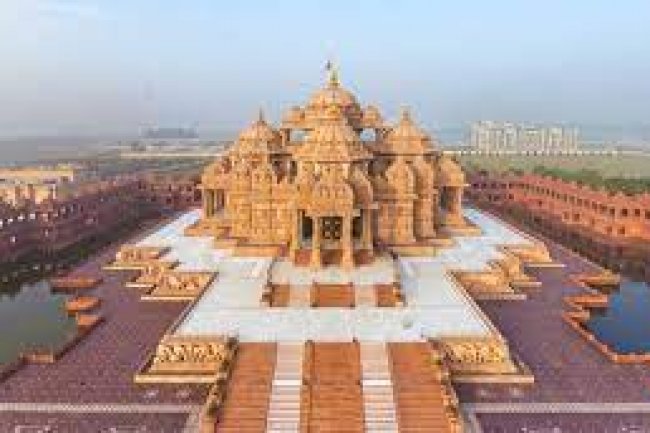
Ellora cave
In Maharashtra, central India, the Ellora cave (also known as Elura and, in prehistoric times, as Elapura) is a religious place. The Ellora Caves are listed as a Unesco world heritage site and are known for their Hindu, Buddhist, and Jain temples and historic sites sculpted in the 6th to 8th centuries CE from the local cliff rock. The 8th generation CE Kailasa temple, which is the largest rock-cut world heritage site at 32 meters high, is by far the most spectacular example.

Mar 23, 2021
History Of Ellora Caves
Established between 600 and 1000 CE, Ellora Caves are located in Aurangabad in the Sahyadri hills and are a 2-hour drive from Ajanta Caves. The Ellora Caves are composed of Hindu, Buddhist, and Jain deities and more than 100 caves only 34 accessible to the public unearthed in the Charanandari hills from the basalt rocks. In addition to being a location for the trade road, Ellora Caves acted as accommodation for the traveling Buddhist and Jain priests. There are 17 Hindu caves, 12 Buddhist and five Jain caves portraying the myths of each faith with idols, sculptures, and even monasteries. These caves, built near one another, reflect the unity and solidarity of all faiths and beliefs. Mostly during the Rashtrakuta empire, a portion of the Hindu and Buddhist glaciers were constructed, and the Yadav empire constructed the Jain glaciers. It is not yet known whether the caves-the Hindu or the Buddhist-were first established. Based on the historical forensic evidence at different places. For the Ellora caves, there were basically three major construction phases: the ancient Hindu era from 550 to 600 CE, the Buddhist period from 600 to 730 CE, and the ultimate era, the Jain and Hindu phases between 730 to 950 CE.
Picture: collected
Ellora Caves Location
The Ellora Caves, located in northern Maharashtra, are 400 km from Mumbai. The address for the Ellora Caves is Ellora Cave Lane, 431005 Ellora, Aurangabad, Maharashtra. Famous Caves of Ellora Cave Here we will discuss some caves of "Ellora Cave":Hindu Caves (Ellora Cave)
Ellora is by far the most significant second wave location of rock formations-cut Indian architecture, situated in the Sahyadri mountains overlooking Aurangabad. There are 35 caves and rock-cut temples mostly on the western side of one hill, constructed of volcanic basalt rock, mainly generated during the period of the Kalachuri empire in the 6th and 7th centuries CE. The Hindu Ramesvara (no. 21), the oldest cavern, dates back to the 6th century CE. An inner sanctum (garbhagriha), a circumambulatory passage for devotees to walk through, backpack straps with the double alcoves, and comprehensive decor through elevated-relief frescoes and artistic renderings portraying scenes from the religious texts of the Puranas are traditional of early Hindu temples. On the outside, Cave 21 has crafted river goddesses, a Nandi statue at the gateway, and a large dancing Shiva followed by musicians inside it and Durga killing the buffalo devil king. Other areas of concern include the use of a few bracket figures (shalabhanjika) and relief. The Dhumal Lena cave (no. 29) does seem to be a copy of Elephanta's renowned cave, indicating a link to Ellora and the Kalachuris. Additional evidence of a historical connection between the two locations in the figure brackets of cave 21. A Hindu goddess was presumably devoted to the Ravana-ka-Khai cave (no. 14). This has a large move-around passage contributing to the hallowed halls and a columned hall. Five sculpture panels, divided by elegant pediments, adorn the interior walls and depict depictions of Shiva and Vishnu.Temple of Kailasa (Ellora Cave)
One of the world's largest more impressive temples is the Kailasa temple (structure no. 16), and that it is the greatest rock-cut framework nowhere. Founded to commemorate his supremacy over Pallavas by Krsna I (r. 756-773 CE) of the Rashtrakuta empire, it further enhanced the grandeur of Ellora, that had been rendered the capital of Dantidurga, Krsna's predecessor, preceding his triumph over opposing Chalukyas in c. CE 753. The Kailasa is the northernmost example of the design of the southern Dravida shrine and is comparable to the Kailasanatha at Kanchipuram. It is a five-shrine temple or panchayatana. A colossal doorway (gopura) was designed on the left side of the property and the remainder of the rear wall was designed into tombs and exhibitions. Two more temples are off the Kailasa, albeit on a much lesser level. With its gopura and the Jagannatha Sabha, there is also the Indra Sabha; are both Jain temples that were the last institutions to be constructed in historic Ellora. The temple is dedicated to Shiva, because its name implies (the name of Shiva's legendary dwelling in the Himalayas), and may also have attempted to recreate his throne on earth. This would be the purpose of the designer is endorsed by the crafted scene of Ravana caught under the mountains of Shiva situated underneath the temple itself. The entire temple, perched on a raised ledge that devotees must ascend through two monumental staircases, achieves an added mountain impact.Caves of Buddhism (Ellora Cave)
The Buddhist caves, possibly between the 7th and 8th centuries CE, are one of the largest unearthed elsewhere and had been constructed later than that of the Hindu one. Their designs are much more complicated so either the vase and foliage or beveled cushions form are the capitals in the façade. Cave 5 is extremely magnificent and exceptionally deep. It has 17 cells and a wide rectangular hall to two rows of 10 columns, with two rows of limestone benches situated within them. Beyond the presumption that pilgrims assembled there for gatherings of some kind, the role of these remains unknown. The interior decoration of these caves shows Buddha figures in their various forms and several Bodhisattvas, some of which, for example, are the earliest instances of Tara. A Bodhisattva figure flanks some of the inner sanctums. In the depiction of four-armed figures, there are instances of Hindu influence, with the carving in Cave 8 being the earliest such example yet discovered.Monuments Jain (Ellora Cave)
In the 9th to 10th centuries, the five tunnels situated north of the Ellora Caves belonging to the Digambara community were reconstructed. These have architectural features including mandapa and a canopied verandah, narrower than that of the Hindu and Buddhist Cave. The Jain temples have yaksha and yakshi sculptures, gods and goddesses, and acolytes all reflecting the mythical Jain tastes of the time.Chota Kailash,(Ellora Cave)
The temple was constructed in the 9th century together with the Indra Sabha, Cave 32, and was constructed on the very same line as those of the initial Kailasha temple or Cave 16. The temple comprises two giant Indra statues, one with eight arms and another with 12 arms and a dancing pose. Indra's poses and during dance represent the number of weapons. There are also other gods and dancers in the cave.Timings from Ellora Caves
The opening hours of the Ellora Caves are from dawn to dusk. The Ellora Caves schedule runs from 8 in the morning to 5.30 in the evening.Opening Days of Ellora Caves
On Tuesdays, the Ellora Caves are shut. It is possible to visit the caves for the rest of the week. From November to March, Ellora Caves is the best time to explore.How To Enter The Caves of Ellora
Ellora Caves can indeed be easily accessed via buses and taxis, located around 27 km from Aurangabad city. In Aurangabad, many private taxi stands offer a ride to the cave and back, based on the type of car, starting at Rs 1,000. The guide will take you an hour or so to get to the tunnels. The Maharashtra State Road Transport Corporation (MSRTC) runs bus tours with AC Volvo vehicles to Ellora Caves.How to Get in Ellora Cave
Google map: click here You can enter Ellora caves by bus, airplane, train:Ellora Caves Nearest Bus Stand
Aurangabad's Central Bus Stand is 27 km from the Ellora Caves.Ellora Caves' Closest Train Station
The Ellora Caves are 28 km from Aurangabad Railway Station. A few rails to Aurangabad run as follows: Sachkhand Express 12716, Tapovan Express 17617, Ajanta Express 17063.Ellora Caves' Closest Airport
The Ellora Caves are 35 km from Aurangabad Airport. Mumbai, Delhi, and Hyderabad are linked.Ticket to Ellora Caves Online
The entry fee for Indians to Ellora Caves is Rs 40 as well as the people of SAARC and BIMSTEC have to pay Rs 40 as an entry ticket to Ellora Caves. For foreigners, the Caves entrance ticket is Rs 600. There is no ticket price for admission to Ellora Caves for children up to 15 years of age. In fact, at the Tourist Information Centre, which also houses eateries, restaurants, auditoriums, and a parking room, you can purchase an audio-visual guide.
N.B: Wherever you go for a tour, do not leave dirt in the vicinity but a specific place. Keep nature clean.
Writer: Humyara Yeasmin
Reference: unesco , britannica
Click Here to Visit