Thakurgaon District's History
Thakurgaon district which is in the Rangpur division has an area of 1609.52 square kilometers. The location is 25 ° 406 to 26 ° 127 north degree and 8 ° 058 to 8 ´ 398 east longitude

Picture: collected
Thakurgaon district which is in the Rangpur division has an area of 1609.52 square kilometers. The location is 25 ° 406 to 26 ° 127 north degree and 8 ° 058 to 8 ´ 398 east longitude. It is edged by the Panchagarh neighborhood on the north, Panchagarh and Dinajpur areas on the east, west Bengal state of India on the west and south.
The population of Thakurgaon is 121436 where men are 628200 and women are 5617. Muslims are 924254, Hindus are 2803, Buddhists are 6157, Christians are 131 and others are 4132. Indigenous populations like Santal, Oraon, Munda, Mushohor, Rajbangshi, etc also live in this Upazila.
History
It is a portion of the Rangpur Division and ledges India to the west. It was founded as a mahakuma in 1860 consisting of 6 thanas named Thakurgaon Sadar, Baliadangi, Pirganj, Ranisankail, Haripur, and Ruhia. In 1947, it was re-established as a mahakuma comprising 3 thanas of Jalpaiguri and a thane of Koch Bihar of India. In 1981, Atoari was incorporated in the new Panchagarh neighborhood and the area was shrunk in just 5 thanas.
It was then organized as a region on 1 February 1984. During British law, Thakurgaon was a tehsil which is a regional subdivision. In 1947 at the period of the Partition of India, Thakurgaon Subdivision came to be a component of the recently founded Dinajpur District of East Bengal. In 1984 Takurgaon subdivision stood split off Dinajpur and became a different district called "Thakurgaon District".
Since 1879 Thakurgaon neighborhood was decreed by Maithil Brahmins and Bengali Brahmins like Bikhash Jha, Barun Thakur, and Vidhenesh Roy Until 1947 Thakurgaon region had a just Hindu maturity of 52%. Largely people think Thakurgaon areas remember earned their name from Barun Thakur a Maithili Brahmin.
Government Thakurgaon subdivision was formed in 180 years under the Dinajpur region. The subdivision was rolled into an area in 1984, Of the five Upazilas of the district, Thakurgaon Sadar Upazila is the biggest which is 63.45 square kilometers, and Haripur the nearest which is 201.06 square kilometers.
Pakistani cops showed great brutality on some naive Bengalis near Bhatarmari Farm in Pirganj. They murdered 16 villagers at Belcha Jhingran village in Baliadangi Upazila. On the 26th of April, two independence soldiers were martyred in the blast of the Pakistani cops at Chhotapalashbari and Bar Palashbari villages and they shot and murdered 9 innocent people near Tornai river near Kushalnagar Hat. On a similar day, the Pakistani cops murdered 6 people in Kaliganj.
In Bhuli, Gareya, and Salander of this neighborhood, the liberation warriors battled face to face with the Pakistani cops. Moreover, the Pakistani cops achieved killing, suffering, and raiding in Haripur Upazila. There is an adaptable process of culture in the neighborhood; occasional celebrations and cultural occurrences are annually organized there. Alpona Sansad classifies Boishakhi Mela in every Bangla new year.
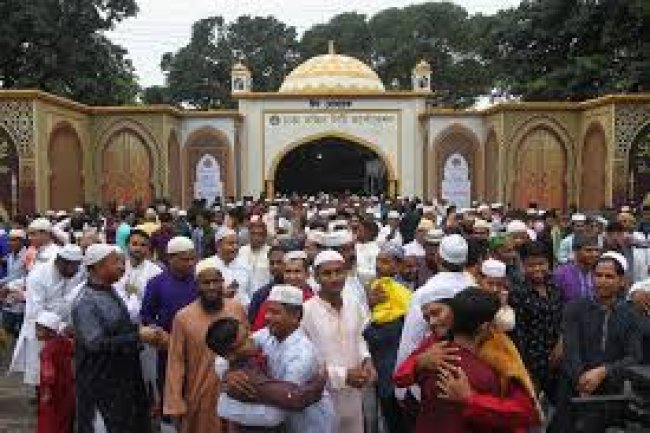
Held "Eid Fair'' at the event of Eid-Ul-Adha & Eid-Ul-Fitr every year at Thakurgaon Boro Match too. Various theater associations like Sapla Natto Gosty-Estd.1974, Nischintapur Theater-1983, etc. rehearse and accomplish yearly and organize new and popular dramas every month. Dhamer Gaan is an unusual traditional cultural creation of Thakurgaon people.
The occurring 10 societies in this neighborhood celebrate their origin and cultural practices. The folk community of Thakurgaon is very famous. Jari, Sari, Bhavaya, Kabi Gaan, Satyapir's Pala Gaan, Charak Puja, Rasyatra, Proverbs, Riddles, Rhymes are significant among all.
Google map: click here
Writer: Shanjana Hossain
Information collected
Click Here to Visit