Dinajpur District’s History
Dinajpur District is one of the oldest and largest districts in the Rangpur Division of northwestern Bangladesh

Dinajpur District is one of the oldest and largest districts in the Rangpur Division of northwestern Bangladesh. The region is geologically part of the Indian plate, which was part of Gondwanaland, formed in the early Jurassic period.
Gondwana or Gondwanalandwas a supercontinent that existed from the Neoproterozoic (about 550 million years ago) until the Jurassic (about 180 million years ago).

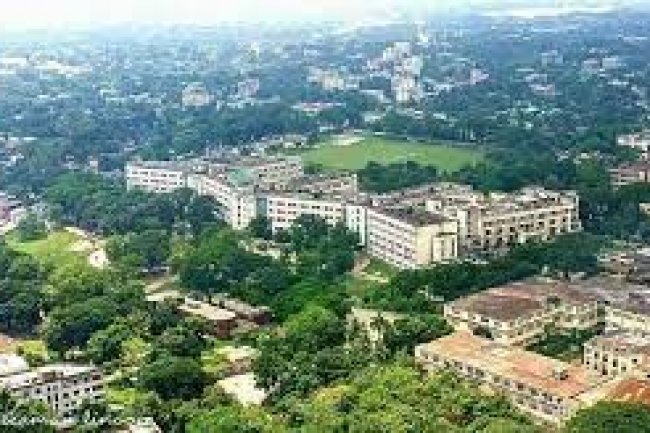
fig: Collected
Establishment and namingDinajpur district was established in 1786. There is a rumor that a Dinaj or Dinaraja is the founder of the Dinajpur royal family. According to his name, the name of the mouza located in Rajbari (Royal-House) is "Dinajpur". Later the British rulers abolished the Ghoraghat government and formed a new district and named the district "Dinajpur" in honor of the king.
History
Location and boundaries in ancient times Reviewing the history from ancient times to the present, there are many differences of opinion among historians about Dinajpur. Five copperplate inscriptions from the Gupta period at Damodarpur, a copperplate inscription from Kumargupta's reign at Baigram and two copperplate inscriptions from the reign of the first Mahipala and the third Vigraha Pala at Beloa are found in there were two issues known as Kotivarsha and Panchnagari. Kotivarsha was at Bangarh or Kotivarsha near Gangarampur police station in western Dinajpur, India. The subject refers to the district's national administrative infrastructure. The whereabouts of the Panchangari issue have not been determined until today. There is no doubt that the Pentapolis described in Greek history and the Panchanagari mentioned in various copperplate inscriptions of the Gupta and Pala eras are identical. Evidence of the decline of Panchanagari soon after the reign of the first Mahipala is found in the Belwa copperplate of the first Mahipala and the third Vigraha Pal. From the Bangarh copperplate and the Damodarpur copperplate, it is known that the eastern boundary of the crore year subject was most probably the Karatoya River flowing towards the east of Phulbarithana and the course of the Karatoya which met the Jamuna river north of Birampur probably indicates the southern boundary of the crore year subject in Phulbari-Birampur area. After that, the river Jamuna was the eastern boundary of the matter for millions of years. Damodarpur copperplate Chandigram is a very possible present Chandipur. From the two Baigram and Belwa copperplates, it may be inferred that the western boundary of the Panchanagari subject was most probably the ancient Jamuna River and the northern and eastern boundaries were most probably a tributary of the Karatoya Riverrespectively. Exact details of how far the subject stretched to the south are not available. However, in the vicinity of Pundravardhana, a subject called Shilvarsha is found. To the north of this subject was the very possible southern boundary of Panchnagari. From this information, it can be inferred that almost the whole area of the Nawabganj police station of Dinajpur district, the whole part of Ghoraghat police station, the area east of Jamuna river under Hakimpur and Birampur police station, Gobindganjsub-district of Rangpur district. Panchanagari consisted of the whole area and some parts of Joypurhatthana. There are many ancient settlements in this whole area. Among them, Sitakot-Nawabganj, Chakjunid-Daria, Bhaduria-Harinathpur, Belwa-PallarajGhoraghat-Rogdaha-Saheganj, Biratnagar, Tungishahar, Patharghata (Mahiganj), and Charkai-Birampur are mentioned. For various reasons, bothPatharghata and Charkai-Birampur can be considered as Panchanagari. British rule As a result of taking civil in 1765, Dinajpur district came under the control of the British East India Company.
In 1772 an English collector was appointed at Dinajpur. At that time the notoriety of anarchy in the region spread. The British Administrative Control was formed here in 1786by the British rulers. At that time Lucknow, Bajinnatabad, Tezpur, Panjara, Ghoraghat, Barbakabad, and Bajuha, Dinajpur district (then Ghoraghat district) was formed with the help of these six governments. District headquarters was formed at Dinajpurcity. In 1786, a man named Marriott was appointed as a collector. After that Red Fern and Vansittart were appointed as collectors of Dinajpur for a short time. The next collector was also assigned to the trial of the Hatch District. At that time the boundaries of the district administration extended towards Malda and Bogra. Indigo cultivation started in Dinajpurat the end of the eighteenth century. Dinajpur was the largest district of undivided Bengal. Several parts of Bogra, Malda, Rajshahi, Rangpur, and Purnia districts were then included in Dinajpur. According to the survey of 1857-61, the area of Dinajpur district was 4,586 sq miles (11,880 sq km). Between 1795 and 1800, a large part of the district was included in Rajshahi, Rangpur, and Purnia for administrative and law enforcement purposes. In 1833 some areas again moved to Bogra and Malda. Later in 1864-65, 1868, and 1870 more areas were transferred under Malda and Bogra districts. Finally, in 1897-98, the entire Mahadevpur police station was included in Rajshahi. At that time only the Thakurgaon sub-division was fully governed by the Dinajpur District Collector. Dinajpur municipality was established in 1856. It is one of the first 40 municipalities of Bengal. Initially, the town was governed by a town committee headed by a deputy magistrate. Later, in 1868, the 'District City Act' provided for the appointment of a chairman instead of a deputy magistrate, and the chairman was made to have the same rank as the deputy magistrate. In 1869, a man named Patterson was appointed as chairman of the Dinajpur municipality.
The people of Dinajpur district spontaneously participated in the Tebhaga movement of 1946-47.The Tebhaga movement was significant peasant agitation, initiated in Bengal by the Kisan Sabha (peasant front of the Communist Party of India). Contribution to the liberation war In the war of liberation of 1971, Dinajpur was under Sector 6 and 7.Sector 6 included Thakurgaon in Dinajpur and the southern part of Dinajpur was under Sector 7.On 29 March, in a battle between the freedom fighters and the Pakistani army on Dinajpur Road in Fulbari sub-district, the freedom fighters seized several vehicles, ammunition, and weapons of the Pakistan army.On 8 April, the Pakistani army brutally killed about 300 people and set fire to houses in Ramkrishnapur, Bagbari, and Payadapara in Parbatipur sub-district.On 19 April, the Pakistani army attacked Hili in the Hakimpur sub-district.Two freedom fighters were martyred in a battle between the Pakistani army and the freedom fighters at Hakimpur’sChhatni. Seven Pak soldiers were killed and 16 freedom fighters were martyred in a battle between the freedom fighters and the Pakistani army at Ketra Hat in Birampursub-district.On 20 July, the Pakistani army brutally killed 21 innocent people in the village of Khairgani in the Nawabganj sub-district.They killed 157 innocent people on 10 October at Chararhat in Nawabganj sub-district.On 13 November, the Pakistani army killed 37 innocent people at Behala in Bijor Union of BiralUpazila.From November 21 to December 11, about 345 freedom fighters were martyred in battles with the Pakistani army at different places in Hakimpursub-district.In the first week of December on the east bank of Bhatgaon Bridge in Birganjsub-district,The attack of the freedom fighters killed about 50 Pakistani soldiers and destroyed two tanks of the Pakistani army. Some freedom fighters were martyred in the battle. On 4 December, civilians attacked a jeep at Beparitola in the Birampursub-districtand killed several Pakistani soldiers.On 15 December 30 freedom fighters were martyred in a battle between the freedom fighters and the Pakistani army at Bogulakhari. Besides, about 100 Pak soldiers were killed in a battle between the freedom fighters and the Pakistani army at BahbalDighi in the Biralsub-district.
In KaharolUpazila, 10 Pak soldiers and 7 innocent Bengalis were killed in a battle between the freedom fighters and the Pakistani army.After the liberationwar, 4 slaughterhouses and 7 mass graves were discovered in Dinajpur.A total of 5 memorials have been constructed in Dinajpur district in memory of the martyrs. Recent history During the partition of 1947, a large part of Dinajpur moved to West Bengal and was renamed as West Dinajpur District. In 1984, Thakurgaon and Panchagarh, two subdivisions of Dinajpur, became separate districts.
Google Map: Click Here
Written by,
Nazeeb Alam
Information Collected