Nilphamari District’s History
Nilphamari District is a district in the north-western part of Bangladesh.

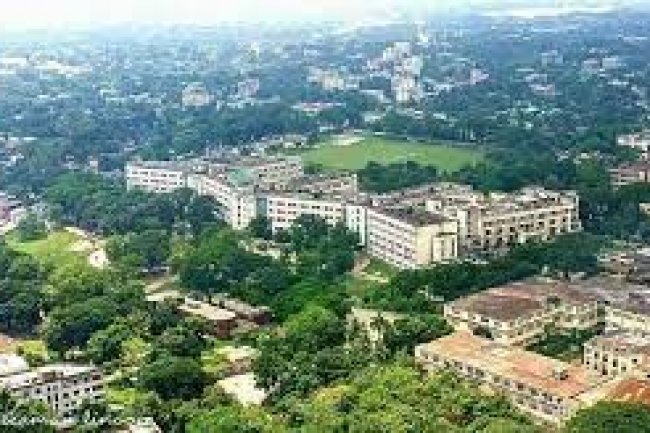
Nilphamari District is a district in the north-western part of Bangladesh. It is one of the eight border districts of the Rangpur Division (one of the eight divisions of Bangladesh which was formed as the seventh division in 2008). Nilphamari is also the name of the district headquarters. Jalpaiguri district of India is on the northern border of Nilphamari district and Lalmonirhat district, Rangpur district, Dinajpur district, and Panchagarh district are located on the other side.
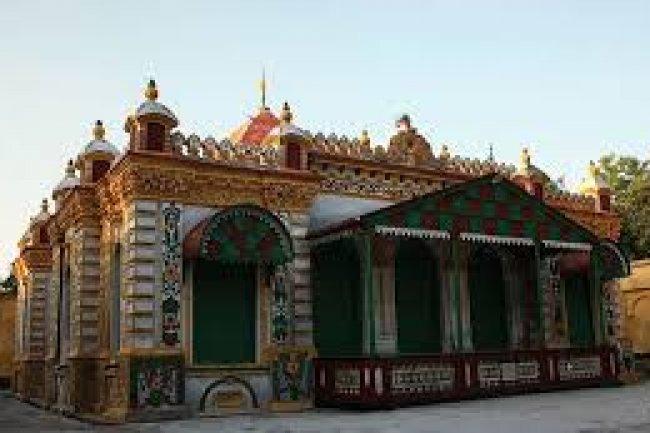
Nilphamari district is called the land of the indigo. The district has a rich cultural heritage and topography which sets it apart from other districts. The hilly and drought region of the district to the north, the sandy area of the Teesta to the east, this high and sandy land has gradually turned into fertile agricultural land to the southwest.
Nilphamari bears many witnesses of history. Many festivals and fairs are organized in this district including Satyapir's song, duck game, fish game.

fig: Collected
Naming historyMore than two hundred years ago, the English indigo planters established indigo farms in this region. As the fertile land of this region is conducive to indigo cultivation, more indigo factories and indigo farms are established in Nilphamari than in other parts of the country. At the beginning of the nineteenth century, indigo factories were established at Durakuti, Dimla, Kishoreganj, Tenganmari, etc.At that time, in the greater Rangpur region, Nilphamari was the largest producer of grain due to its fertile soil. That is why indigo plantercame to this area in large numbers. Numerous blue farms developed. There was a large indigo factory near the old railway station, three kilometers north of the present town of Nilphamari. Moreover, the old house now used as an officers' club was an indigo factory. It is believed that in the face of local farmers, the 'blue farm' was transformed into the 'blue farm'. And the name Nilphamari originated as a corruption of this Nilkhamari.
Events of the Liberation War Several innocent Bengalis of Syedpursub-district lost their lives in the attack of non-Bengalis (Biharis) on 23 March 1971. On 7 April the Pakistani army tortured and killed the Bengalis in this sub-district. On 8 April the Pakistani army took control of the town of Nilphamari district. In May, in collaboration with the Razakars, the Pakistani army captured and killed Rabindranath Kundu, a prominent businessman from Kishoreganj, after detaining him for eight days. On 23 June the Pak army shot and killed 350 innocent Bengalis at Golahat in Syedpur. On 11 December Mostafizur Rahman of Kishoreganj was captured and killed by the Pak army. On 14 December two freedom fighters were martyred in a battle between the freedom fighters and the Pakistani army at Kishoreganj (sub-district ofNilphamari). On 16 December Jaldhaka (another sub-district of Nilphamari) was liberated from the Pakistani army.The subdivision was formed in 1875 and the subdivision was turned into a district in 1984. Among the six sub-districts of the district, the NilphamariSadar sub-district is the largest (373.09 sq. km) and the smallest sub-district is Syedpur (121.68sq. km).
How to go: You can go to Nilphamari by bus and fortunately, the buses are available 24 hours a day. On a regular day, without any occasion, it will take a minimum of 7 hours to cross the 364 km distance from Dhaka. To reach Nilphamari from Dhaka, here are some useful details regarding buses, their stations, and contact numbers:
- Bablu Enterprise
- Tel: Shyamli: 8120653, 01716 932 122
- J, B, Paribahan (Dhaka- Bogra- Nilphamari)
- Starts from: Mohakhali Inter-District Bus Terminal.
- SR Travels
- Telephone: Kalyanpur: 01711-394801, 9033793
- Gabtoli: 9031226
- Mohakhali: 0155-231 5831
- Uttara: 01711-394 804
Written by,
Nazeeb Alam
Information Collected
Click Here to Visit